Fast Fitness - Seventh Group Functional Training: Advancing Ankle and Knee Safety With Single Leg Jumps
Friday, April 16, 2010
Jolie Bookspan, M.Ed, PhD, FAWM
Here is Fast Friday Fitness - seventh in the series of Functional Fitness Training (Bookspan Basics) to teach your group, teams, classes, students, kids, battalions, or self. In this Bookspan Basic Training, you advance lower leg stability from single leg vertical jumps to lateral movement:
Assemble your group in neat rows. Stand in front in view of all. Tell them this is a basic, functional physical skill to learn how to reduce lower body injuries during sideways jumps. Remind them they need to use the same principles from the Third, Fifth, and Sixth FFT of vertical jumps.
Have everyone crouch using good bending (knees do not sway inward or slide forward, taught in the first skill), then rise to toes with stable neutral ankle (not bowing outward at the side, taught in the second skill). Remind them that when they land from a jump they use the same neutral ankle.
Stand with good stance on one leg only. Have them leap side to side from one leg to the other
Then try it jumping side to side on the same leg. Switch and repeat.
Use this for improving ability and reducing injury potential from changing direction, cutting, lateral movement, landing to the side from jumps, slips and missteps, and more. It builds on the Third, Fifth, and Sixth Functional Training exercises where you learned to jump vertically (up and down), laterally (side to side) with good lower body mechanics, then advanced to vertical single leg jumps.
During actual real life walking around, practice this by hopping (from one foot to the same one foot only) from point to point. Use street cracks and lines as goal points.
Trainers, Drill Instructors, readers, send in your stories of how you use these in your program.
Good body mechanics are a powerful performance enhancing aid.
Supportive Hard Shoes Linked to Knee Loading and Arthritis
Tuesday, March 30, 2010
Jolie Bookspan, M.Ed, PhD, FAWM
A Rush University Medical Center study has found that supportive, stable shoes increases the load on the knee joints compared with flat, flexible footwear or going barefoot.
Researchers compared gait and knee joint loading of 31 patients with osteoarthritis while walking in flip-flops, barefoot, and wearing several types of popularly prescribed shoes. Clogs and stability shoes increased loads on the knee joints up to 15 percent over flat walking shoes, flip-flops or barefoot. Knee loading was roughly the same whether the subject wore flips-flops or walked barefoot.
Dr. Najia Shakoor, rheumatologist and lead author stated, "Stiffness is also a factor. We've shown in earlier studies that barefoot walking is associated with lower knee loads than walking with conventional footwear. It may be that the flexible movement of the bare foot is mechanically advantageous. The natural flex of the foot when it contacts the ground probably attenuates the impact on the joint, compared to the artificial 'stomping' movement created by a stiff-soled shoe."
"Clogs and stability shoes, conventionally believed to provide appropriate cushioning and support, actually increased the loading on the knee joints, as opposed to shoes with less 'support,' flatter heels and more flexibility."
The article stated, "A higher-than-normal load on the knees during walking is a hallmark of the disease, associated with both the severity of osteoarthritis and its progression."
Primary Source -Najia Shakoor, Mondira Sengupta, Kharma C. Foucher, Markus A. Wimmer, Louis F. Fogg, Joel A. Block. The effects of common footwear on joint loading in osteoarthritis of the knee. Arthritis Care & Research, 2010; DOI: 10.1002/acr.20165
Study authors felt they had to also issue a caution that people who will trip if they wear flip flops or have poor balance not to wear them, however it seems better to do simple function to improve balance and reduce cause of the falls rather than wrap people in shoe "straight-jackets" that are not good for them.
When I was small, I remember worrying that horses had to wear iron shoes. I asked the teachers in school if it hurt the horses' feet, and was told their feet don't feel anything (a myth). I asked if the metal increased the hard impact against paved streets and why didn't horses wear sneakers instead. I was told that sneakers were bad for you because they don't "support" (another myth). I asked why you needed anything to hold your own body up and why you couldn't have healthy feet without them. I asked if cavemen wore support shoes and incredibly, the teachers said that support shoes were important and barefoot was wrong and cavemen had to wear shoes or they would not be able to walk. Later I found that arthritis, lameness, and gait changes were higher in metal shod horses, and that new horseshoes were being made in urethane and other soft composites.
When I tell patients that hard supportive shoes are known to increase pain and problems, they say they wear them because their doctor told them to, their trainer, their aerobics instructor, and their physical therapist said they must. When I remind that hard shoes may be part of their knee and foot pain, they say that they got the shoes from their podiatrist or orthopedic shoe place. Doctors used to recommend smoking cigarettes for the several benefits they gave - calming nerves, better digestion. The two bad side effects (illness and death) were left out. It may be commonly repeated that you need hard supportive shoes however, untrue stories are common.
Fast Fitness - Sixth Group Functional Training: Advancing Ankle and Knee Safety With Single Leg Movement
Friday, February 26, 2010
Jolie Bookspan, M.Ed, PhD, FAWM
Here is Fast Friday Fitness - sixth in the series of FunctionalFitness Training (Bookspan Basics) to teach your group, teams, classes, students, kids, battalions, or self.
Today, Feb 26th, is my birthday. Celebrate with healthy movement and having some fun. In this Bookspan Basic Training, advance your lower leg stability with single leg use, to be ready for landing from jumps, slips and missteps, and more.
It builds on the Third and Fifth Functional Training exercises where you learned to jump vertically (up and down) and leap laterally to one foot (side to side) with good lower body mechanics.
Assemble your group in neat rows. Stand in front in view of all. Tell them this is a basic, functional physical skill to learn how to reduce knee and ankle injuries during sideways jumps. Remind them they need to use the same principles from previous (Third) Basic Training of vertical jumps:
Have everyone bend both knees to crouch using good bending (knees do not sway inward or slide forward, taught in the first skill), then rise to toes with stable neutral ankle (not bowing outward at the side, taught in the second skill).
Have them stand on one leg only. Repeat crouching then rising to the ball of that foot (half-toe) on that one leg. Rise and lower on one leg. Don't let body weight sway outward to the small toes, turning the ankle. Keep strong neutral stance. Repeat 10-100 times, depending on time and need.
Remind them that when they land from a jump, they use the same good bending and neutral ankle. Then use all good mechanics to hop - jump and land on that one leg. Hop 10-100 times, depending on time and need. Change legs and repeat.
Photo - lower limb stability and placement during landings of all kinds prevents injuries. Practice so you don't turn your ankle or knee.
Each new Functional Training exercise shows how to teach your groups (or self) how to prevent common musculoskeletal problems during the team season or operational theater.
Trainers, Drill Instructors, readers, send in your stories of how you use these in your program.
Good body mechanics are a powerful performance enhancing aid.
--- Read success stories and send your own. See if your answers are already here - click Fitness Fixer labels, links, archives, andIndex. Subscribe free - updates via e-mail or RSS, upper right. For personal medical questions - Replies to Medical Questions. Limited Class space for personal feedback. Top students may earn certification throughDrBookspan.com/Academy. Learn more in Dr. Bookspan's Books.
Fast Fitness - Hip and Quadriceps Stretch Lying Down
Friday, February 05, 2010
Jolie Bookspan, M.Ed, PhD, FAWM
Here is Fast Friday Fitness - The front of the leg and hip are helpful places to stretch. Here is another nice stretch for the front of your hip and thigh.
People often "do" a quadriceps stretch without getting a stretch. They keep the front of their hip bent forward at the crease where it meets the body, meaning the area is being shortened not stretched. This is opposite of the point of the stretch. To get the stretch and the idea of lengthening and extending at the hip:
Lie on one side with both knees bent in front of you. It is ok to round your body a bit. The spine is not rounding under compression. It's a nice stretch. Prop your head comfortably.
Keep the bottom knee still bent in front of your body.
Notice different stretch with raised and lowered top knee placement. Stretch the other leg too.
Prevent these reasons the top knee may hurt:
Don't pull back so hard that it pulls painfully at the knee.
Tight quads can feel like knee pain when they tightly pull where they attach at the knee. It is not a problem with the knee, but with tight thigh and quadriceps muscles. Tight people may feel sharp pulling or yanking around the knee when trying to put weight on a knee stretched behind them, as when ruining or lunging. The problem is tightness, so stretch gently and intelligently. The idea is to stretch the quads so you don't hurt, not yank so that you do.
Check that you are not twisting at the knee - generally you can tell this if your foot is facing a different direction than the front of your knee. One commonly missed reason for knee pain felt during running and walking is twisted stretching, including yoga poses like lotus and hero if you don't turn from the hip, and others, covered in Knee Pain When Running - Check Your Yoga.
--- Read success stories of these methods and send your own. See if your answers are already here by clicking labels, links in posts, archives, and The Fitness Fixer Index. Subscribe free, "updates via e-mail" upper right. For personal medical questions - Replies to Medical Questions. Limited Class space for personal feedback. Top students may earn certification throughDrBookspan.com/Academy. Getinfo all in one place in Dr. Bookspan's Books.
If your knee pain from running isn't getting better with fixing bad gait, physical therapy, and medical care, check your yoga. Several poses directly twist, overstretch, or pinch knee cartilage. Over time, injury builds that does not show much in people who do yoga and little else, until their knees encounter resisted motion for running and sports, or from a trip or fall.
Not long ago, people in yoga or sports did not intersect much. Now, the previously more sedentary yoga populations try running, aerobics, and sports. Athletes are being told that yoga will give them magic benefits. Knee injuries bloom when they go back to sports, making the staunch yoga camps claim sports are the culprit, when it was the knee damaging motions in yoga and other stretches. The knee is a primarily a hinge joint, like the hinge on a door that only can open and close. The door swings toward you and away. If you lift up on the door, it twists the hinge and eventually loosens it. The door begins to creak and rub and make noise.
Think of sitting cross-legged (tailor style). Your knees are out to the side and your lower legs bend toward you. All is fine at that point. Now picture, as with lifting upward on a door, you lift the foot and lower leg to rest it on your thigh in Lotus position or lifting it in some pigeon poses as in the photo, at right. Unless you outwardly rotate the upper leg fully at the hip, the knee twists, overstretching the lateral (outside) ligament and pinching the medial meniscus and soft tissue.
Often people bend the ankle upwards too, also pictured at right, a separate problem - see Unhealthy Yoga Ankles.
How to picture rotation at the hip? Think of a stapler. Like the door just mentioned, the stapler has a hinge or knee joining two sections, like your upper and lower leg. It opens and closes on the hinge. If you pull the upper or lower part sideways, it twists or shears the hinge. To turn to staple sideways, you need to rotate the whole thing.
Hero pose, (Supta Virasana) begins sitting on bent knees, meditation style (left-hand photo below), which often is fine. The knee hinge closes, like closing a door, normal bending. Then the pose continues by pulling the feet outside of the upper legs, like pulling upward on the door hinge. If you do not inwardly rotate both upper legs at the hip fully, your knee twists at the hinge, overstretching the medial (inside- facing the other knee) ligament, pinching the lateral (outer) meniscus and soft tissue. Lying back, as in the right-hand photo adds prying of the joint to the rotation damage (often people overarch the lower spine too instead of stretch the muscles, an additonal problem). In "W" sitting, both feet face outward. Not a problem for the knee unless the hips do not fully rotate (whether relentless W sitting is eventually is too much at the hip is a separate question). Runner's hurdler stretch is the same issue, one leg at a time.
Even though yoga may call for "doing both sides" and following each motion in one direction with one in the other, twisting both the medial and lateral sides of the knee cartilage by doing both Lotus and Hero will not cancel each other, but can overstretch and degenerate both sides.
Warrior poses 1 and 2 are like a lunge. Check your front knee: - Is it inside the line of your foot? - Do your foot and knee face the same direction?
Sagging inward unequally loads the knee and when the foot and knee face differently, the knee twists under body weight (blue center model, photo at right).
Keep your knee above your foot, both facing directly forward.
Mighty Chair pose - watch for, and change overly-stylized artificial position, not valuable for any functional motion (photo right and lower drawing left).
For chair pose, use outer thigh muscles to hold straight and prevent knees from sinking inward. Use neutral spine instead of overly-arched to practice movement the way it is needed all day for real life. Right-hand drawing below shows fixing.
Make yoga something that benefits your real life movement habits, not trains artificial, damaging, motion you don't even need.
Hindu squats and one-legged heel-up deep bends may not twist the knee as much as pry it. Picture a tool to crack nuts - two handles joined at a hinge, like your upper and lower leg joined at the knee. Imagine putting an object (for example, a soccer ball) between the upper and lower leg and try to close the heel toward the upper leg - if the ball does not compress, the hinge (knee) pries open. That happens with low squats on the toes (heels up) if you have large or heavy legs. If you have slender legs, the heels can come closely, like bending your elbow so that your lower arm rests along your upper arm. Slender legs do this, while muscular athletes may destabilize their knees, leaving them venerable to future injury.
The beginning of one of the pigeon poses is pictured at right. The person pictured is sitting to the side, instead of keeping the back knee and leg rotated to face straight downward. Sitting to the side greatly reduces the stretch, especially to the rear hip's front muscles that need the stretch, but usually no big problem to the knee. When the pose continues to lift the back foot for King Pigeon, if you lift the foot up without facing the knee downward, you twist the knee joint. By turning the whole leg downward, you get a better anterior hip stretch, and when you lift the foot, the knee can bend like a hinge, not twist.
One Legged King Pigeon kneels on the rear knee with that knee bent so only the kneecap bears your weight. To reduce compression, and get a better stretch for your hip, move your back leg further back so that your weight rests on the thigh, not kneecap.
I have taken several yoga teacher certifications. Each gives different, plausible-sounding rationale why knee twist poses help, but the anatomy is just off enough to come to wrong conclusions. In one, they taught to deliberately twist the lower leg on the upper "to protect the meniscus." Twisting does not protect, but twist in a damaging way. There are two bones in the lower leg, allowing some rotation, but twisting injures other structures. Another teacher training stressed extreme knee twisting as a stretch in itself, stating that any increase in motion is beneficial, especially from joints. Knee laxity results. Without much muscle and positioning training, you predispose yourself to instability when giving the knee challenge, like going back to sports, or from a fall or blow. Another certification teacher training taught that knee twisting is beneficial since it allows great range of motion in case you fall down with your knee twisted backward. Sounds plausible for that one fall (unless you fall differently), but for every other day in your life, so much extra space can result that the joint 'rattles' and wears prematurely. In another class we were made to sit in Lotus, then, still folded in Lotus, rise to knees and swivel from knee to knee to waddle around the room, compounding damage with body weight on the twisted strained joints.
In each yoga teacher training and class I take, I hear teachers tell about their knee pain and surgeries. They don't know why. They think they need more yoga and do more injurious poses, getting relief or distraction for the moment, then pain comes back. Movement in general often relieves pain for the moment. No need to repeatedly add injury to get temporary relief. Stop the causes and the pain stops.
There are assertions that many people do these stretches and not everyone gets knee pain, so they must be fine. Smoking and unsafe sex also do not have a one-to-one association with immediately bad consequences every time. Some stretches and movements twist the knee and overstretch cartilage. If you do these stretches and have pain, or just sit or stand with your knees hyper-extended (locked back) even if you think it is unrelated, it is one place to think about.
--- Read success stories of these methods and send your own. See if your answers are already here by clicking labels, links in posts, archives, and The Fitness Fixer Index. Subscribe free - updates via e-mail or RSS, upper right. For personal medical questions - Replies to Medical Questions. Limited Class space for direct feedback. Top students may earn certification throughDrBookspan.com/Academy. Get more in Dr. Bookspan's Books.
Fast Fitness - Fifth Group Functional Training: Ankle and Knee Safety With Lateral Movement
Friday, January 15, 2010
Jolie Bookspan, M.Ed, PhD, FAWM
Here is Friday Fast Fitness - fifth in the series of Functional Fitness Training (FFT) to teach your group, teams, classes, students, kids, battalions…
In this FFT, learn to be ready for changing direction, cutting, lateral movement, landing to the side from jumps, slips and missteps, and more. It builds on the Third Functional Training exercise where you learned to jump with good lower body mechanics.
Assemble your group in neat rows. Stand in front in view of all. Tell them this is a basic, functional physical skill to learn how to reduce lower body injuries during sideways jumps. Remind them they use the previously learned principles from the Third FFT of vertical jumps.
Have everyone crouch using good bending (knees do not sway inward or slide forward, taught in the first FFT skill), then rise to toes with stable neutral ankle (not bowing outward at the side, taught in the second skill). Remind them that when they land from a jump they use the same neutral ankle.
Next, have everyone to leap sideways at once, off one leg onto the other foot, landing softly with good knee bending and neutral ankle. On landing, the knee is already above the foot, not bent inward. Foot is neutral, not flattened inward (pronated) or turning outward like a sprain (inversion and supination).
Leap back to starting place onto the other foot. On landing, the knee is already above the foot. Repeat leaping sideways from foot to foot. With each landing, watch the knee of the landing leg. Make sure the knee doesn't sway inward of foot.
Improve by jumping increasingly fast, and far, for longer periods of time.
Each new Functional Training exercise shows how to teach your groups (or self) how to prevent common musculoskeletal problems during the team season or operational theater. Learn this one to be ready for the fourth one coming next, needed for cutting, changing direction, lateral movement, more.
Trainers, Drill Instructors, readers, send in your stories of how you use these in your program.
--- Read success stories of these methods and send your own. See if your answers are already here by clicking labels, links in posts, archives, and The Fitness Fixer Index. Subscribe to The Fitness Fixer, click "updates via e-mail" upper right. For personal medical questions - Replies to Medical Questions. Limited Class space for personal feedback. Top students may earn certification throughDrBookspan.com/Academy. Get more in Dr. Bookspan's Books.
In the article Kneecap Tracking - Don't Miss These Reasons It Doesn't Get Better, I listed common reasons knee pain doesn't resolve, including common bad stretches, bad shoes, treating the wrong thing, treating the right thing but returning to pronated, duckfoot or pigeon-toe gait (letting arches flatten or knees sag inward, and/or walking toe out or in), and omitting functional exercise and use. Fancy "supportive" running shoes, no matter how expensive or engineered often add to knee pain. I wrote that surgery for a tight lateral area isn't needed when you can stretch it. Readers wrote asking why stretch when you can just have surgery and cut it?
One common surgical procedures is an arthroscopic lateral release - surgical cutting of the lateral muscles from the patella (kneecap). The idea of the surgery is to decrease pull and pressure on the underside of the patella.
Studies following up people undergoing the surgery show, "The results are not always predictable or successful and in some cases, the surgery may have no effect on the patient's problem." http://www.arthroscopy.com/sp05032.htm
Another study from the Netherlands confirmed previous studies showing exercise therapy for patellofemoral pain was more effective to reduce pain and increase function than the often used "rest, wait and see." Science Daily.
Surgery often is made to sound like a quick way to get ahead, but numbers now confirm that you are restricted from full activity for enough time that your physical conditioning, flexibility, bone density, aerobic capacity, strength, and enthusiasm diminish. You will often be further behind, rather than quickly fixing a cause and going forward. Often, as much physical therapy is needed for full recovery after surgery as if you didn't go for the surgery. Stories are told of someone who had the surgery then went right back to skiing. I am the one who many of these people come to a year later. They say they are fine, but they still use pain medicine, still can't bend their knee enough to stretch enough to get relief of other tight areas and so on, and often haven't gotten back to previous benchmarks. To me, that is not "fine" enough. They slowly diminish in key areas of their life. They get new pain they don't recognize as related to compensating movement from the old ones. By the time they see me, they are often on several pain medicines, anti-depression medicines, and others that make new problems.
Surgical risks are also becoming better reported. Blood clot incidence is far higher after surgery than previous released. A study of nearly 1 million women tracked for an average of 6.2 years after surgery, showed risk continues for 12 weeks and includes minimally invasive procedures.
Not all patellofemoral pain is a tracking problem. Tracking pain is in the patellorfemoral area (where kneecap and top leg bone meet). However, other conditions besides tracking make patellofemoral pain. People with patellofemoral knee pain may be sent for tracking therapy even surgery, without needing it. Standing and moving allowing the knee to sag or rotate inward can also make rubbing. Surgery and tracking exercises do not address this. They may be done but yield no result. It is not a mystery.
--- Read success stories of these methods and send your own. See if your answers are already here by clicking labels, links in posts, archives, and The Fitness Fixer Index. Subscribe to The Fitness Fixer, click "updates via e-mail"upper right. For personal medical questions - Replies to Medical Questions. Limited Class spaces for personal feedback. Top students may apply for certification throughDrBookspan.com/Academy. Learn more in Dr. Bookspan's Books.
Poor tracking is not a disease or a syndrome, or that you are doomed to arthritis. Usually it is a simple injury process that can be stopped. Tracking problems are often given several names: Lateral Facet Syndrome, Chondromalacia, Anterior Patello-Femoral Pain Syndrome, Lateral Pressure Syndrome, Malalignment Syndrome, Maltracking Syndrome, Patello-femoral Degenerative Arthritis, and other scary names. Not all of these are due to poor tracking. Calling something tracking when it is not, often leads to much time trying tracking "cures" when you need other things.
Instead of surgery, you can stretch the tight side areas and retrain the weak ones, so the kneecap slides normally instead of grinding sideways in its channel. Stopping causes stops need for surgery, or even bracing and pain pills. The knees heal and you go back to all you want to do, using the new healthy mechanics.
What can you do when pain continues after physical retraining? Captain Scott wrote that he had been to physical therapy for his knees "for a few months without much success." He had previously endured ongoing treatments for back pain, then discovered Fitness Fixer methods and resolved the pain. He came back to see if he could do the same for his knees.
Kneecap tracking should begin normalizing within days of stopping causes - far sooner than "a few months." If not, one obvious thing to check is if you have the right re-tracking stretches, exercises, and functional retraining. After that, here are four common reasons when PT does not "work."
Tracking Exercises That Don't Fix Tracking. A common PT scenario is doing 10 (or however many) repetitions of straightening the knee against resistance of a stretchy band, called "terminal extensions," "setting" exercises such as squeezing things between the knees, stretching the lateral (side structures), and small leg lifts with ankle weights to strengthen inner thigh muscles (VMO)s. Without retraining gait and knee use during real life movement, the person often gets up from the PT session and walks away and goes back to their activities with the same poor tracking. PT needs to look at and fix specific use during real life activity - do you turn your knee inward or your feet outward, do you let your foot flatten, do you let your upper leg bone rotate, do you walk with your feet turned outward (duckfooted) or inward (pigeon toe). Weight or resistance used is often far less than what the knee encounters when the person stands up and uses their knees to walk away from their exercise session. Tracking angles should monitored during rehab. Not just during standing or during leg lifts, but during the patient's customary activities. If they are not changing, and they are the confirmed cause, then you may not be changing tracking.
Are You Sure It's a Tracking Problem. Knees can hurt for other reasons. Not all patello-femoral pain is from tracking. You can go for the best re-tracking programs, but if your knee does not have an actual tracking problem, it is no mystery when tracking exercises do not help. You have not spent time fixing the cause. Make sure that tracking is the reason before treating for tracking. Tracking can be identified with specific patellar x-rays or other scans that can clearly include position during several points of motion. Tracking also can be visualized - look at kneecap path during quadriceps use during several kinds of movement. The kneecap slides up and down obviously under the skin at the knee during use. There is a variable degree of normal angle at the knee. Human legs are not straight from upper to lower leg. That angle at the knee allows us to walk upright on two legs in a smooth gait. The angled knee is one of many markers that tell forensic scientists and anatomists if the leg bones they are looking at are human. Sometimes a normally tilted kneecap slide is misidentified as a tracking problem when it is a normal angle in line with the joint.
Multiple Causes. Sometimes tracking mal-alignment is confirmed and rehab done. The patella tracks normally and stops wearing the area, but pain continues from other causes. No mystery. Check for other poor knee mechanics that cause injury. Check if your shoes are too hard. Many people paying for "good supportive shoes" get knee pain from the hard shoe. Often the pain from bad shoes is sharply outlined around the kneecap with deeper aching. Check your bending. If you have pain with knee bending (squatting), fix that. Check your stretches. Some twist the knee joint, such as lotus and hero poses in yoga, hurdler's stretch and others. Stretches should stretch muscles, not cartilage in joints. Fitness Fixer articles summarize and my books detail more.
Medicines that Cause Pain. Whether you have tracking problems or not, common prescription medicines cause pain that does not respond to PT. Look into stopping reasons you need the medicines in the first place, and save yourself time, money and pain.
My idea of health care is a quick, straightforward assessment of causes and intelligently addressing them. That beats having someone stick a knife in your knee and charging you for it.
Health&Fitness in Plain English THIRD edition - How to Be Healthy, Happy, and Fit for the Rest of Your Life. Both available from www.DrBookspan.com/books.
Fast Fitness - Third Group Functional Training Exercise: Ankles and Knees in Jumps and Landings
Friday, October 02, 2009
Jolie Bookspan, M.Ed, PhD, FAWM
Here is Fast Friday Fitness - third in the series of Functional Fitness Training (Bookspan Basics) to teach your teams, squads, classes, students, kids, groups, battalions, etc.
Assemble your group in neat rows. Stand in front in view of all. Tell them this is a basic, functional physical skill to reduce musculoskeletal injuries, that puts together the first and second skills, previously learned:
Tell everyone to crouch using good bending (knees do not sway inward or slide forward, taught in the first skill), then rise to toes with stable neutral ankle (not bowing outward at the side, taught in the second skill).
Next, have everyone bend and rise increasingly rapidly and smoothly, in a jumping motion, first without rising from the ground, then barely jumping. With each bend and rise, they maintain good knee bending and neutral ankle. Repeat 10-100 times, depending on time and needs.
Next, tell everyone to jump, landing softly using thigh and hip muscles for shock absorption, and good knee bending and neutral ankle. Start jumping moderately, then work for increasing height with each repetition. Repeat 10-100 times, depending on time and needs.
Use conscious control to prevent inversion sprains and turns by not allowing the ankle to invert (turn sideways) when rising to toe during push-off in running and jumping, and coming down during landings. Watch for healthy ankle and knee stability and placement throughout the team season.
Each new Functional Training exercise shows how to teach your groups (or self) how to prevent common musculoskeletal problems during the team season or operational theater. Learn this one to be ready for an upcoming FFT, needed for cutting, changing direction, lateral movement, more.
Trainers, Drill Instructors, readers, send in your stories of how you use these in your program.
Good body mechanics are a powerful performance enhancing aid.
--- Read and contribute your own success stories of these methods. Before asking questions, see if your answers are already here - click labels under posts, links in posts, archives at right, and the Fitness Fixer Index. For answers to personal medical questions - Replies to Medical Questions. Subscribe to The Fitness Fixer, free. Click "updates via e-mail"(under trumpet) upper right. See Dr. Bookspan's Books, take a Class, get certifiedDrBookspan.com/Academy.
Fast Fitness - Count How Many Times You Help Or Hurt Your Body Daily
Friday, July 17, 2009
Jolie Bookspan, M.Ed, PhD, FAWM
Here is Fast Friday Fitness - a simple tool to help you notice how many times during your ordinary day you can either get functional built-in exercise for leg, back, and hip muscles plus a Achilles tendon stretch, or produce a common factor in back and knee pain.
Every time you bend down to reach or retrieve something, count it
See how many bends you do for ordinary chores and by the end of the day
Choose if you want to hurt or help your fitness each time.
David from Belgium has written numerous Fitness Fixer success stories and created many photos and videos for better learning. He writes:
"I just spent half an hour vacuuming our house downstairs.
"When I do chores like these, I try to practice some focus instead of letting my mind wander all over the place.Usually this means I try to remain aware of my breathing (breathing normally, not grunting, straining, or holding breath to reach or lift things).
"But today I thought of one of your articles that said how many times on average a person bends over during the day. So I decided to count this for myself, just for fun and something to focus on.
"In the roughly 30 minutes of vacuuming, I counted 67 squats. Now that's a good workout! =)
Photos by David of squat and lunge for household bending
Bending over "wrong" is a common factor in back pain, and not only for out of shape people. It is common in many weight lifters. Bending "wrong is often done as an exercise. It doesn't strength back muscles as much as other ways, and puts large load on the discs, So it's not a helpful trade-off.
Previous Fitness Fixer posts explained that doing a few good rehab exercises and stretches for back pain won't undo a day of bad bending, and that you bend hundreds of times each day. "Fitness as a lifestyle" does not mean doing crunches during TV commercials or doing squats while on the phone. It means how you live. Get real exercise, built in, during real daily movement.
You get to choose whether you add an obvious check mark in the pile of things that don't benefit your fitness or whether you get functional exercise.
Fitness Fixer post on good bending for knees and back at the same time:
--- Questions come in by hundreds. I make posts from fun mail. Before asking more, see if your answers are already here - click labels under posts, links in posts, archives at right, and the Fitness Fixer Index. Why not try fun stuff, then contribute! Read success stories of these methods and send your own.
Subscribe to The Fitness Fixer, free. Click "updates via e-mail"(under trumpet) upper right. See Dr. Bookspan's Books, take a Class, get certified - DrBookspan.com/Academy.
Weak Hips on Purpose? Running Injury and Hip Strengthening
Wednesday, June 03, 2009
Jolie Bookspan, M.Ed, PhD, FAWM
Who works their hips? Fitness Fixer success story Robert Davis wrote me several
notes that the weightlifters he knew didn't want to exercise their hip because they thought it would take away from the "V shape" they worked for.
Mr. Davis said that using my daily good bending and other functional exercise worked his hip greatly. He was pleased with reduction of stiffness and pain and increase in strength and mobility. No decrease in "V-shape."
The May/June 2009 issue of Sports Health: A Multidisciplinary Approach, published a study based on a literature review, concluding that running injuries to the lower leg may have more to do with weak hip muscles than how many miles run. Lead author Reed Ferber, Assistant Professor and Director of the Running Injury Clinic from the University of Calgary stated ”Hip muscle weakness especially appears to lead to atypical lower extremity mechanics and increases forces on knees and feet while running.” He also stated, "Based on a literature review, it appears that foot pronation (turning the arch and ankle flatter to the ground, and/or the knee inward) and inadequate hip muscle stabilization are the top categories for injury.”
From my own work in this area, I found that strengthening alone won't make you run with good mechanics, prevent pronating, or other injurious habits, you need to retrain them too. Not hard. Stopping your life to do rehab exercises then returning to bad daily movement also isn't so helpful. My work builds-in both strengthening and mechanics to daily life - functional exercise. Robert Davis has been sending in his successes fixing back and other injury using functional fitness.
Robert Davis writes:
"I had made a slight error in my story! I just wanted to let you know.. I had not ordered fix your own pain till only about 4 weeks ago cause I was looking at my expenses and the Amazon one came up!
"So to see how rapidly things change when you take up these habits is even more encouraging.
"Some things I noticed along the way (I did have some slight questions on this!). My hip muscles for one, started to get "sore". I believe this is because of over tightness and overall lack of use. My guess is like every other gym rat they avoid things to make obliques and lower back "too" big because it takes away from the V shape they are after. Everyone seems to fall for this but it is an un-healthy trap I now realize.
"Anyhow I had started to get really sore over the last few weeks in hip muscle areas and even upper buttocks from stretching these areas and working them (using your stuff). When I practiced going into full squats, this really seemed to stretch out areas that began to show signs of weakness/tightness. So it was like working out muscles and getting that "soreness" when your muscles start to adapt. I kinda figure it is as it is just as normal to workout a bicep and for it to "be sore" the next few days.
"The soreness goes away and with each passing week, it becomes more mild - kinda like the body getting used to biceps being sore and you don't get sore anymore.. They do not get sore like they did when I first started your stuff. I was just curious if you had seen this. I am sure it is normal, especially for a group of muscles not used to being used or stretched out.!
"Jeez I do not think most people realize just how tight and weak they can be in areas, mostly because they are never used or people are used to being tight there. People do not believe in the squat (I showed a few people to prove them wrong lol) because they are too tight. I realize how much I am glad I found this out early in life. I get stronger every day in the areas that were weak. I know I will have a much better core, lower back, complete back, and body then before I hurt myself :)
"I put together my "planche/pull up" setup for pictures and to start working on a full planche! That is difficult to do like you do it! Any suggestions? Just keeping trying? Heheh
"Thank you again! Thank you for posting my story."
Mr. Davis, thank you. You are well ahead of the fancy researchers :-)
Read success stories of these methods and send your own. Questions come in by the hundreds. I make posts from fun ones. Before asking more, see if your answers are already here by clicking labels under posts, links in posts, archives at right, or in the Fitness Fixer Index.
The RSS feed may still be down. Click "updates via e-mail"(under trumpet) upper right. See Dr. Bookspan's Books. Get certified - DrBookspan.com/Academy.
Knee Surgery - Arthroscopy Results No Better than Pretend Surgery
Wednesday, May 27, 2009
Jolie Bookspan, M.Ed, PhD, FAWM
A study of arthroscopic knee surgery found that the surgery was no more successful than pretending to do the surgery.
Arthroscopic surgery for knee arthritis is performed in substantial numbers. Why? The patient's doctors said they needed it. Where did the doctors get that opinion? It is taught in medical school and repeated at medical conferences. Repeating things is not evidence-based medicine (which is key) but vehemence-based medicine. When highly paid people repeat things without even knowing if it is true, that is eminence-based medicine.
Studies are now following up the same patients who had the surgery. Numbers show that often the surgeries are not needed, and people can do as well without surgery, and with intelligent non-surgical rehab.
This is not new. In the 1930's, patients being prepared for the rigors of surgery through exercise, often found that by surgery time, they didn't need it. Other patients without receiving exercise went straight to surgery. They may have had continuing pain and damage after surgery or later in life, but patient tracking was not done. Doctors just reported that the surgery was done, the patient lived, and that was all, and on to the next paying job.
Then studies compared surgery to physical rehab without surgery. Improvement rates were found to be about the same.
Then came an even more interesting study in 2002 of 180 patients that compared knee arthroscopic surgery to cutting the patient but not doing the knee surgery. Sixty patients in the placebo group received skin incisions and underwent a simulated surgery without insertion of the arthroscope. Two other groups had one of two typical knee procedures: Sixty-one patients had arthroscopic lavage group, and 59 to had arthroscopic débridement.
Results showed, "At no point did either of the intervention groups report less pain or better function than the placebo group." Conclusions were, "In this controlled trial involving patients with osteoarthritis of the knee, the outcomes after arthroscopic lavage or arthroscopic débridement were no better than those after a placebo procedure."
Source: A Controlled Trial of Arthroscopic Surgery for Osteoarthritis of the Knee. New England Journal of Medicine. Volume 347:81-88. July 11, 2002. Number 2. NEJM.
This does not mean that surgery does not "work" but that you do not have to have it or be rushed into it, if it is not right for you. There are other ways, often as quick, and less expensive and painful and without the limitations following. Take your time. Don't let anyone push you into something not right for you. Medical claims that you will get worse if you do not have immediate surgery have not turned out to be factual.
Read success stories of these methods and send your own. Before asking questions, see if your answers are already here by clicking labels under posts, links in posts, archives at right, or in the Fitness Fixer Index. For personal medical questions - Replies to Medical Questions. Subscribe to The Fitness Fixer, free. Click "updates via e-mail"(under trumpet) upper right. See Dr. Bookspan's Books. Get certified - DrBookspan.com/Academy.
Hamstring to Quadriceps Ratios Not the Answer in Knee Injury
Monday, January 26, 2009
Jolie Bookspan, M.Ed, PhD, FAWM
A common myth is that injury comes from "muscle imbalance" in the thigh from too much strength in the quadriceps muscles over the hamstring muscles.
Early studies showed poor ratios of quad to hamstring strength. It was concluded that because of this, when the athlete would kick, for example, the overly strong quadriceps would overstraighten the knee, and the overpowered hamstring behind the thigh would not be able to stop the powerful straightening. The knee would overstraighten and hyperextend the joint, injuring it.
Athletes were put on hamstring strengthening training. Then they went back to kicking with the same bad habit of overstraightening as before.
The problem was simply that they athlete would hyperextend the knee. They were allowing it through bad training habits, not being made to do it by a strong quadriceps. Your muscles do not make you move. You learn though training and practice how to move in healthy ways.
What to do? When you kick, don't fling your leg out and hyperextend (overstraighten) the knee. Control the end point position. When you land from jumps or descending stairs, don't step down on a locked, straight knee. Control the end point position.
--- Read and contribute your own success stories of these methods. Before asking questions, see if your answers are already here - click labels under posts, links in posts, archives at right, and the Fitness Fixer Index. Subscribe to The Fitness Fixer, free. Click "updates via e-mail"(under trumpet) upper right. For personal medical questions - Replies to Medical Questions. LimitedClass spaces for personal evaluation. Top students may apply to certify through DrBookspan.com/Academy. Learn more in Dr. Bookspan's Books.
Fast Fitness - Fixing Arches, Knock Knee, and Knee Pain Without Orthotics
Friday, January 23, 2009
Jolie Bookspan, M.Ed, PhD, FAWM
Here is Fast Friday Fitness - Stop one major source of inward-turning knees (knock-knees). Click the movie arrow to run:
Look at your bare legs in a mirror with feet facing straight forward.
See if the knees turn inward to face more toward each other than forward.
Feel how the muscles can pull outward to gently move (not force) knee position. These muscles like to be used correctly, not left unused.
Often, knees turned inward are a simple case of letting body weight sag downward onto the inside of the leg and arch of the foot, not a case of unchanging anatomy. Pain often comes from letting the knees and ankles twist, rotate, and sag. Restoring neutral position can stop this source of pain. Don't yank or force one segment, like the knee, causing problems in others. Restoring neutral means healthy position for the whole leg.
Orthotics are hard inserts that hold your foot in a certain position. Orthotics are different from cushion inserts that make a softer landing for each step. You can control leg and foot position without orthotics. That doesn't mean orthotics don't work, just that you can do it without them. It's cheaper and you get a free leg muscle stability workout at the same time.
Remember, don't force. If it hurts, it's wrong. Creating new strain instead of restoring function is not health or good thinking. All you are doing is restoring muscle length and using that to learn how to stand neutral, not tilted so much that you compress your joints.
Questions come in by the hundreds. I make articles from fun ones. See if your answers are already here - click Fitness Fixer labels, links, archives, andIndex. Read success stories and send your own. For personal medical questions - Replies to Medical Questions. Limited Class space for personal feedback. Top students may earn certification throughDrBookspan.com/Academy. More fun in Dr. Bookspan's Books.






![Reblog this post [with Zemanta]](http://img.zemanta.com/reblog_e.png?x-id=e86b3f01-d305-4934-9050-317f217d097e)
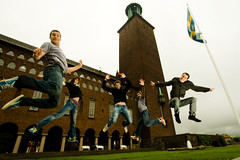 Use conscious control to prevent inversion sprains and turns by not allowing the ankle to invert (turn sideways) when rising to toe during push-off in running and jumping, and coming down during landings. Watch for healthy ankle and knee stability and placement throughout the team season.
![Reblog this post [with Zemanta]](http://img.zemanta.com/reblog_e.png?x-id=7f3cda12-f181-4c7a-9393-ff9d7b56df77)



![Reblog this post [with Zemanta]](http://img.zemanta.com/reblog_e.png?x-id=5c9e9e53-e500-4bf7-a5ee-7561c3b1b5b9)
![Reblog this post [with Zemanta]](http://img.zemanta.com/reblog_e.png?x-id=25fd256d-472e-41d9-b740-09e0e14664b0)
